GRAPE VARIETIES [home] [topic page]
GRAPES ARE COMPLEX FRUIT and the many varieties have very different characteristics.
They have, at full maturity, a relatively high sugar content leading to a high alcohol wine. Tasmanian wines are rarely below 12% alcohol. Wines with alcohol levels below 10% are sensitive to bacterial spoilage. Higher alcohol contents lead to better keeping and developing.
Grapes also have a relatively low acid content. Most fruits are acidic. Grapes are noted for tartaric acid and malic acid with only tiny values of citric acid. pH values are typically 3.1 to 3.7. The juices are often titrated against the tartaric acid as a check.
Wines have 400+ molecular compounds as part of their "nose" and taste components. ( For an excellent list of "wine terms" and meanings, try www.winespectator.com. )
Tasmania grows many varieties but the most common are listed below.
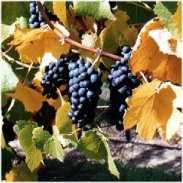
Pinot Noir
This is an early maturing grape which makes it excellent in higher latitudes such as Tasmania. "Bourgogne" wines of the Cote d'Or region of France are Pinot Noir wines thus it is associated with the great French products.
It has a distinctive floral character and is usually a high alcohol wine which makes for good development in the bottle. The wines are much softer and ar earlier ripening than Cabernet.
Cabernet Sauvignon
- ( a Bordeaux region grape ) 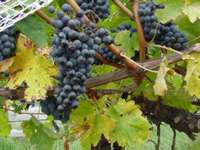
This grape is one of the most commonly planted vines in Australia. It is described as producing a strong fruit flavour and is high in acids and tannin.
The wine is often described as blackberry like. The tannins lead to a good aging.
Chardonnay 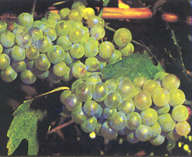
A very popular white from northern France. In France it is responsible for the wines of Montrachet, Chablis amongst others, and the white variety of Champagne. In Tasmania, it is bottled as a single grape bottling, as a blend and is also used in Tasmanian champagne styles.
Its wine is usually fresh and fruity - often described as "melon or peach or...."
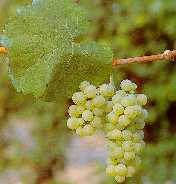 Riesling
This particular variety comes from northern France and southern Germany where it it is grown in the Rhine Valley. It tends to produce sweeter "honeyed" high quality styles of wines of high fruit content though these can still be of high acid levels. It is best when consumed with food.
This variety, when accidently infected with the fungus botrytis, produces a very concentrated powerful tasting wine.
