BOTTLING [home] [topic page]
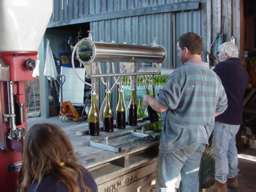
Once a wine is considered ready for bottling, it is pumped to the machine, bottled and corked.
Traditional cork of Portuguese oak bark is still usually used for better wines though this is very expensive. Other artificial capping means are being experimented with especially for wines of lower alcohol levels which tend to be cheaper and consumed quickly.
The cork must be free from bacterial infections - sterile - otherwise the wine in the becomes foul tasting - "corked".
Despite the nature of cork, oxygen uptake is negligible. This is desirable. Oxygen would oxidize subtle aromas and chemicals in the wine destroying its complexity.
Aging in the bottle
Wines change in the bottle depending on their alcohols, acids and other complexities. A good Tasmanian red wine will, to most wine buffs, be considered to be at its best after say 5 years in the bottle at ideal temperatures. After this period, the colour will change from red to brown and many flavours will disappear.
The redox potential is minimised in the bottle after a few months at which point the bouquet of the wine can develop.
Young red wines tend to be purplish, good mature reds a deep red and those getting to the end of their bottle life, a brownish colour.
Tasmanian Riesling wines can also be kept in the bottle for an extended period during which time the colour deepens and the flavours intensify.
